Modern life has made sitting an unavoidable part of everyday routines. Whether working at a desk, studying, driving, or relaxing at home, many people spend several hours seated each day. While sitting itself is not harmful, remaining in the same position for long periods can place continuous stress on the muscles, joints, and discs of the spine.
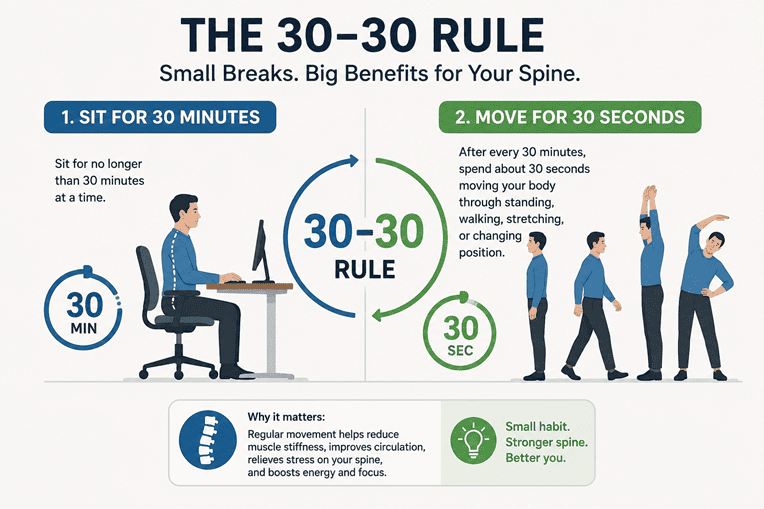
What Is the 30–30 Rule?
Sit for no longer than 30 minutes at a time.
After every 30 minutes, spend about 30 seconds moving your body through standing, walking, stretching, or changing position.
Why Does Prolonged Sitting Affect the Spine?
Long periods of sitting can cause muscle stiffness, reduced joint movement, constant pressure on spinal discs, poorer circulation, and gradual changes in posture.
How the 30–30 Rule Helps
• Reduces muscle stiffness
• Improves circulation
• Promotes joint mobility
• Reduces continuous stress on the spine
• Improves concentration and productivity
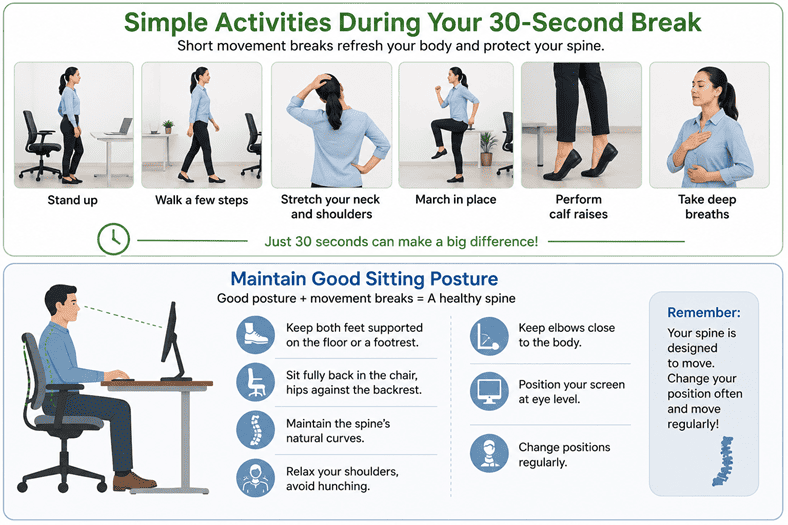
Simple Activities During Your 30-Second Break
- Stand up, walk a few steps, stretch your neck and shoulders, march in place, perform calf raises, or take deep breaths.
- Maintain Good Sitting Posture
- Keep both feet supported, sit fully back in the chair, maintain the spine’s natural curves, relax the shoulders, keep elbows close to the body, position the screen at eye level, and change positions regularly.
Who Can Benefit?
Office workers, students, remote workers, drivers, gamers, older adults, and anyone who sits for long periods.
Easy Ways to Remember
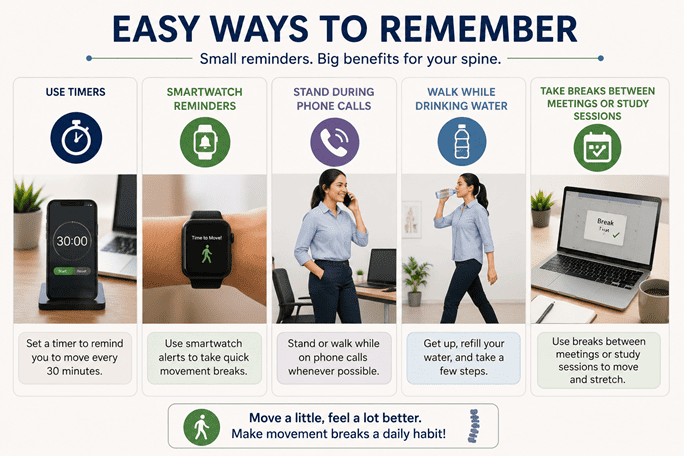
Use timers, smartwatch reminders, stand during phone calls, walk while drinking water, and take breaks between meetings or study sessions.
The Role of Physiotherapy
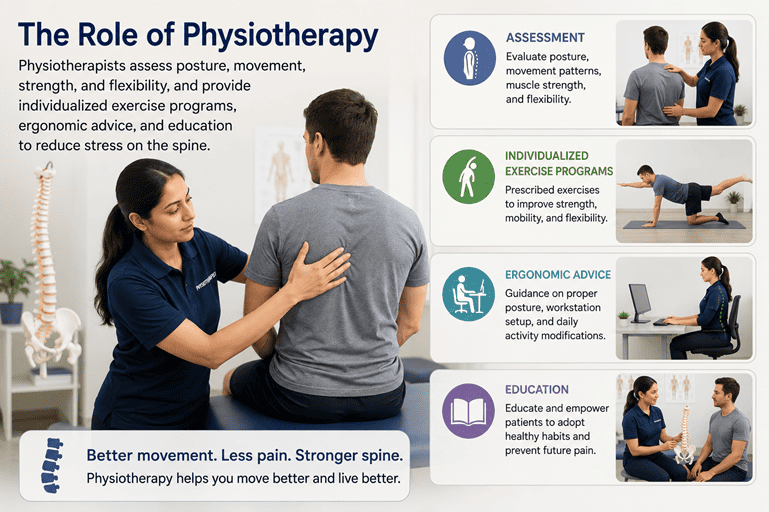
Physiotherapists assess posture, movement, strength, and flexibility, and provide individualized exercise programs, ergonomic advice, and education to reduce stress on the spine.
Conclusion
The 30–30 Rule is a simple, practical habit that encourages movement every 30 minutes. Combined with good posture and regular physical activity, it supports spinal health, improves comfort, and promotes long-term well-being.