
How to Protect Your Spine
Your spine works silently every single day. It supports your body, protects your spine, and allows you to move, bend, twist, and stand upright. Yet most people only think about their spine when pain appears. The good news is that protecting your spine does not require drastic changes — small daily habits can make a powerful difference over time.
Improve Sitting Posture To Protect Your Spine
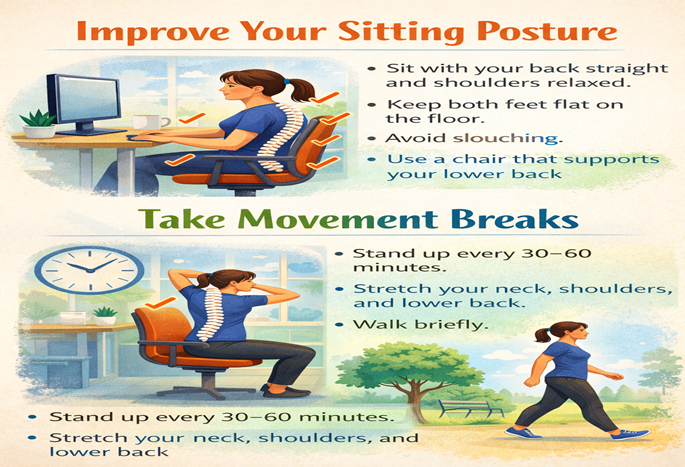
• Many people spend hours sitting at desks, in classrooms, or on sofas. Poor posture places continuous strain on the spine.
• Sit with your back straight and shoulders relaxed. Keep both feet flat on the floor. Avoid slouching. Use a chair that supports your lower back.
Take Movement Breaks
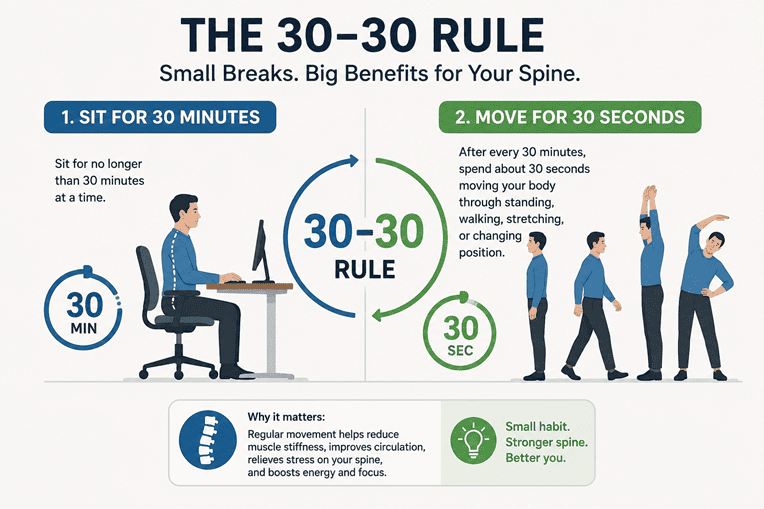
- The spine is not designed to stay in one position for too long. Prolonged sitting causes stiffness.
- Stand up every 30–60 minutes.
- Stretch your neck, shoulders, and lower back.
- Walk briefly.
Strengthen Your Core Muscles
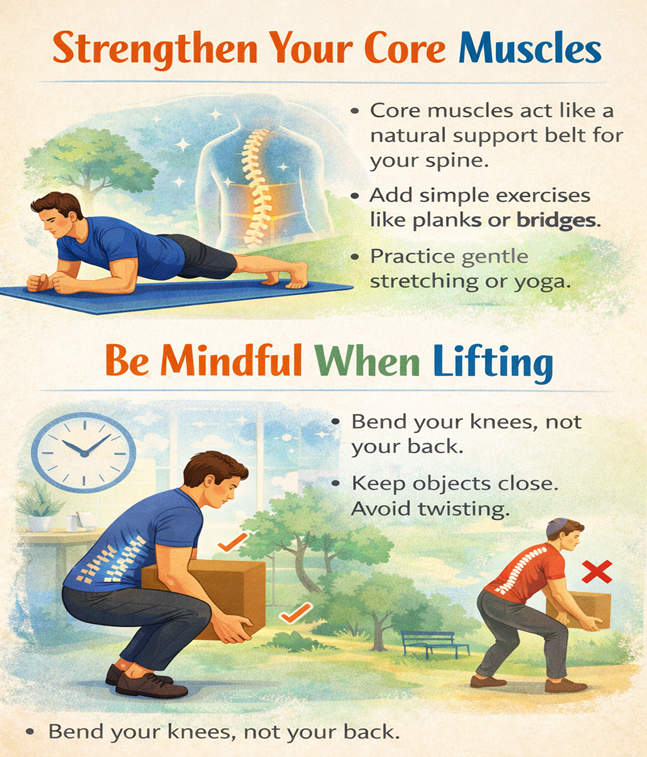
- Core muscles act like a natural support belt for your spine.
- Add simple exercises like planks or bridges.
Choose a Spine-Friendly Sleeping Position
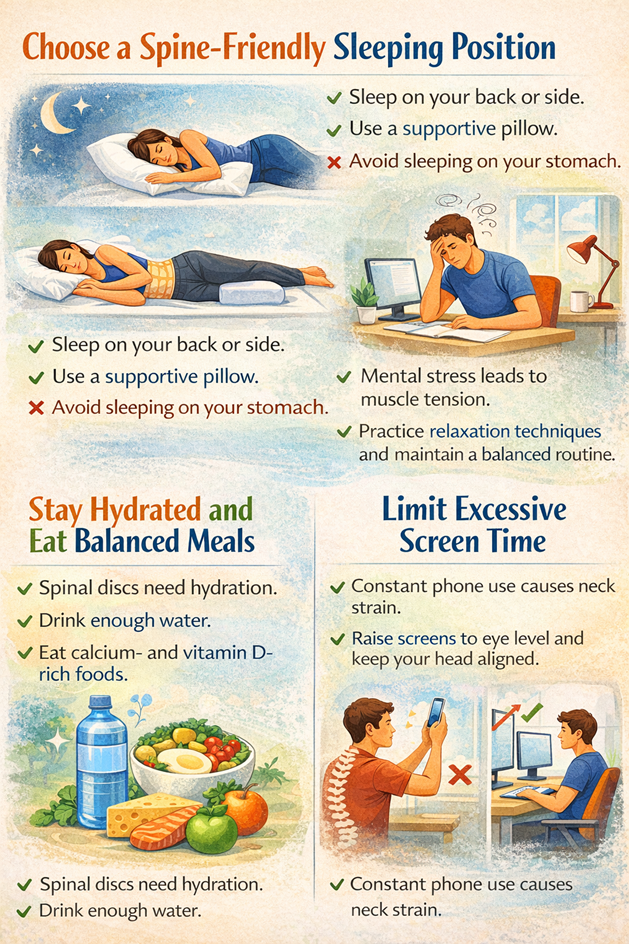
- Sleep on your back or side.
- Use a supportive pillow.
- Avoid sleeping on your stomach.
Manage Stress Levels
- Mental stress leads to muscle tension.
- Practice relaxation techniques and maintain a balanced routine.
Stay Hydrated and Eat Balanced Meals
- Spinal discs need hydration.
- Drink enough water.
- Eat calcium- and vitamin D-rich foods.
Limit Excessive Screen Time
- Constant phone use causes neck strain.
- Raise screens to eye level and keep your head aligned.
Conclusion
Small, consistent lifestyle changes can significantly improve spinal health. Taking care of your spine today ensures long-term comfort and mobility.