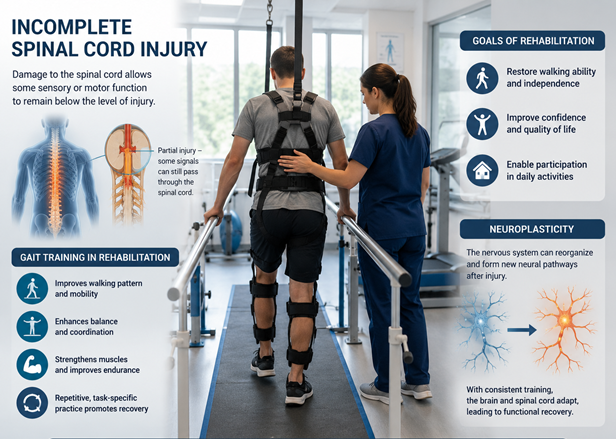
Incomplete spinal cord injury (SCI) is a neurological condition in which the spinal cord is partially damaged, allowing some sensory or motor function to remain below the level of injury. Unlike complete spinal cord injuries, individuals with incomplete SCI often retain partial movement or sensation, creating opportunities for functional recovery through rehabilitation. One of the most important goals during rehabilitation is restoring walking ability, as mobility plays a major role in independence, confidence, and participation in daily life.
Gait training has become a key component of physiotherapy management in incomplete spinal cord injury. It focuses on improving walking patterns, balance, muscle coordination, and endurance through repetitive and task-specific exercises. Modern rehabilitation approaches emphasize the concept of neuroplasticity, which refers to the nervous system’s ability to reorganize and form new neural pathways after injury.
Gait Problems Following Incomplete Spinal Cord Injury
Damage to the spinal cord interrupts communication between the brain and the muscles of the lower limbs. As a result, individuals with incomplete SCI commonly experience muscle weakness, spasticity, poor balance, decreased coordination, and sensory disturbances. These impairments often lead to abnormal gait patterns such as reduced step length, foot drop, slow walking speed, and difficulty maintaining stability during movement.
Walking difficulties can significantly affect a patient’s independence and psychological well-being. Many individuals become dependent on assistive devices or caregivers for mobility. Therefore, improving gait function is not only important for physical recovery but also for restoring confidence and social participation.
Importance of Gait Training
Gait training is a structured rehabilitation process aimed at improving walking ability and functional mobility. It helps retrain the body to perform coordinated walking movements while promoting strength, balance, and endurance. In incomplete SCI, repetitive walking practice stimulates the remaining neural pathways and encourages recovery through neuroplastic changes within the nervous system.
The main purpose of gait training is to help patients achieve the highest possible level of independence. Early rehabilitation can also reduce secondary complications such as muscle wasting, joint stiffness, pressure sores, and cardiovascular deconditioning.
Physiotherapy Approaches Used in Gait Training
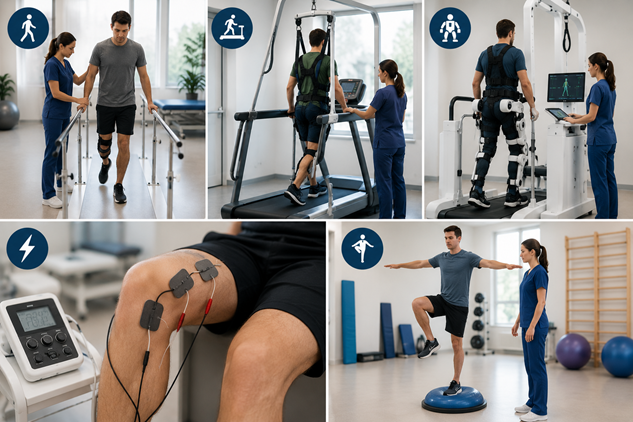
Several physiotherapy techniques are used to improve walking function in incomplete spinal cord injury. The choice of treatment depends on the severity of the injury, muscle strength, balance, and overall functional ability of the patient.
- Overground gait training
• Body weight supported treadmill training
• Robotic-assisted gait training
• Functional electrical stimulation
• Balance and coordination training
Neuroplasticity and Functional Recovery
One of the major principles behind gait rehabilitation is neuroplasticity. The nervous system has the ability to adapt and reorganize after injury when exposed to repetitive and meaningful movement patterns. Task-specific gait training encourages surviving neural pathways to develop stronger connections, improving motor control and coordination over time.
Psychological Benefits of Gait Training
Walking recovery often has a positive effect on emotional and psychological health. Many patients experience increased confidence, greater independence, and improved self-esteem as they regain mobility. Improved walking ability also allows patients to participate more actively in family, work, and social activities.
Challenges in Rehabilitation
Recovery after incomplete SCI can be a long and demanding process. Recovery outcomes vary depending on factors such as the level and severity of injury, age, time since injury, muscle spasticity, pain, and patient motivation. Some individuals may regain independent walking ability, while others may continue to require assistive devices.
Role of the Physiotherapist
Physiotherapists play a central role in the rehabilitation of individuals with incomplete spinal cord injury. They assess gait abnormalities, muscle strength, balance, and functional limitations before designing individualized treatment plans.
The physiotherapist guides patients through progressive exercises, monitors improvement, prevents complications, and educates patients and caregivers about safe mobility techniques.
Conclusion
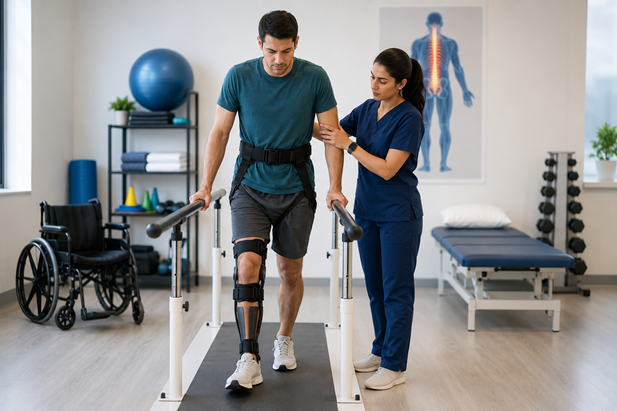
Gait training is an essential component of rehabilitation in incomplete spinal cord injury. Through repetitive practice, strengthening exercises, balance training, and modern rehabilitation technologies, patients can improve walking ability and regain functional independence.
Physiotherapy-guided gait rehabilitation not only enhances mobility but also improves confidence, participation, and quality of life.