Why Posture Matters During Childhood
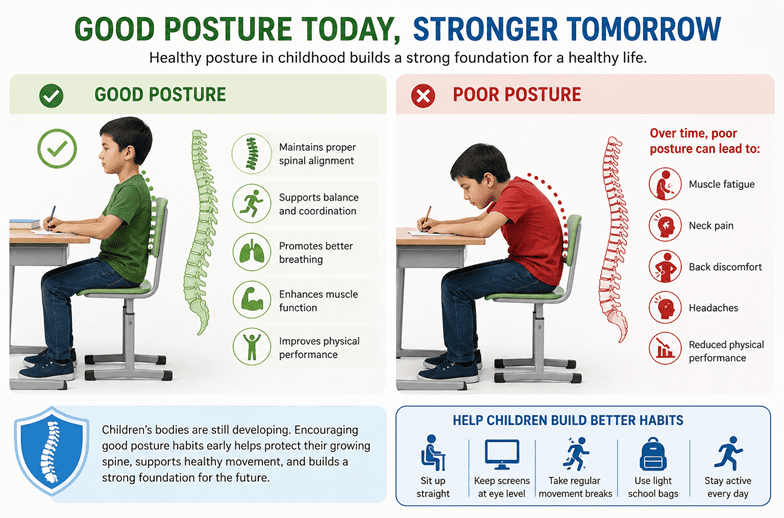
Childhood is a period of rapid growth and development. Bones, muscles, ligaments, and joints are constantly adapting as children grow taller and become more active. Good posture helps maintain proper alignment of the spine, allowing the body to move efficiently and comfortably. It also supports balance, coordination, breathing, and muscle function.
Poor posture does not usually cause immediate serious problems, but over time it can contribute to muscle fatigue, neck pain, back discomfort, headaches, and reduced physical performance. As children grow, habitual poor positioning may increase stress on the musculoskeletal system and encourage unhealthy movement patterns.
Common Causes of Poor Posture in Children
Several everyday habits can negatively affect a child’s posture:
• Prolonged use of smartphones and tablets.
• Sitting for long periods without movement breaks.
• Poorly fitted desks and chairs.
• Carrying heavy school bags.
• Insufficient physical activity.
• Weak core and postural muscles.
• Excessive screen time and sedentary behavior.
Healthy Sitting Habits
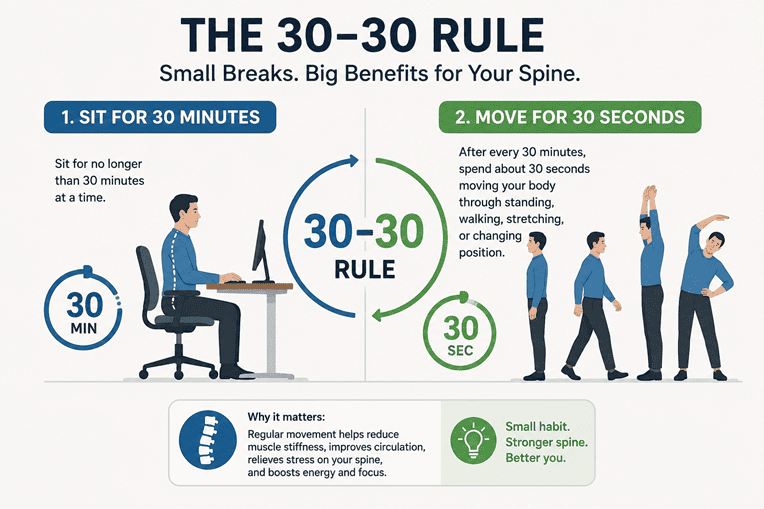
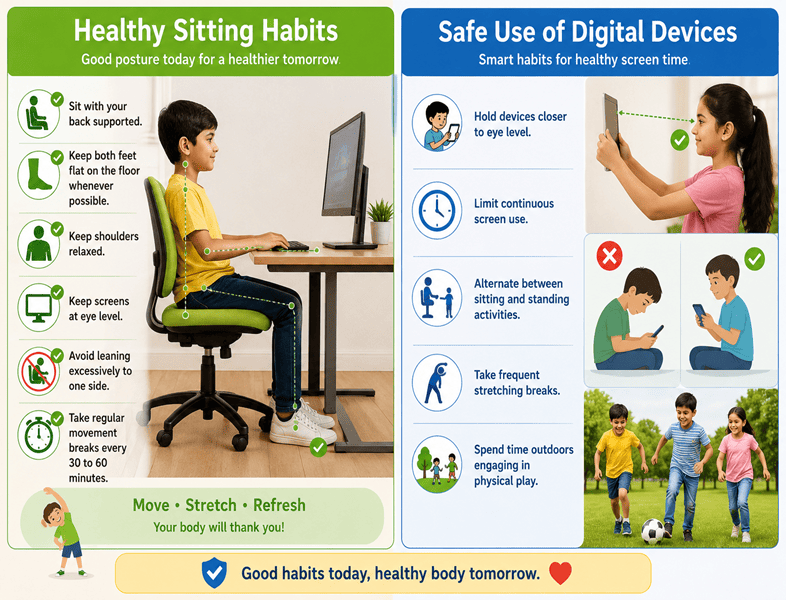
Children should be encouraged to sit with their back supported, keep both feet flat on the floor whenever possible, maintain relaxed shoulders, keep screens at eye level, avoid leaning excessively to one side, and take regular movement breaks every 30 to 60 minutes.
Safe Use of Digital Devices
Parents can help by encouraging children to hold devices closer to eye level, limit continuous screen use, alternate between sitting and standing activities, take frequent stretching breaks, and spend time outdoors engaging in physical play.
The Importance of Physical Activity
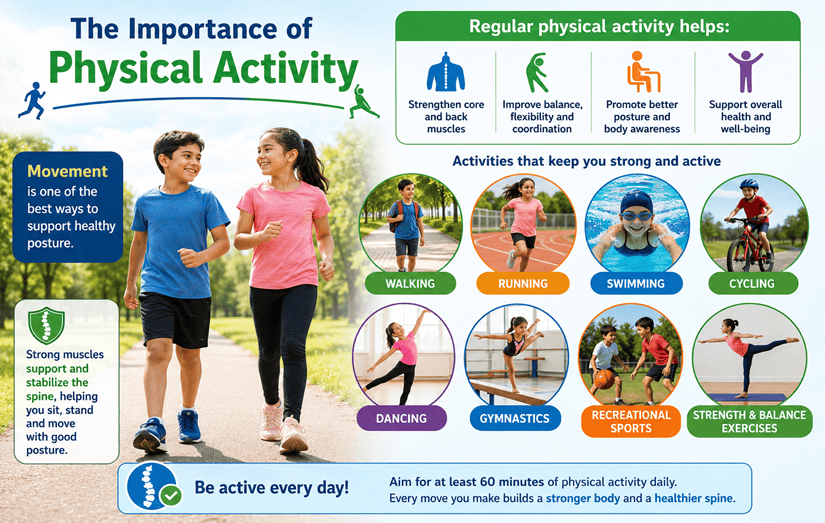
Movement is one of the best ways to support healthy posture. Activities such as walking, running, swimming, cycling, dancing, gymnastics, recreational sports, and age-appropriate strength and balance exercises can strengthen muscles that help stabilize the spine.
School Bags and Spine Health
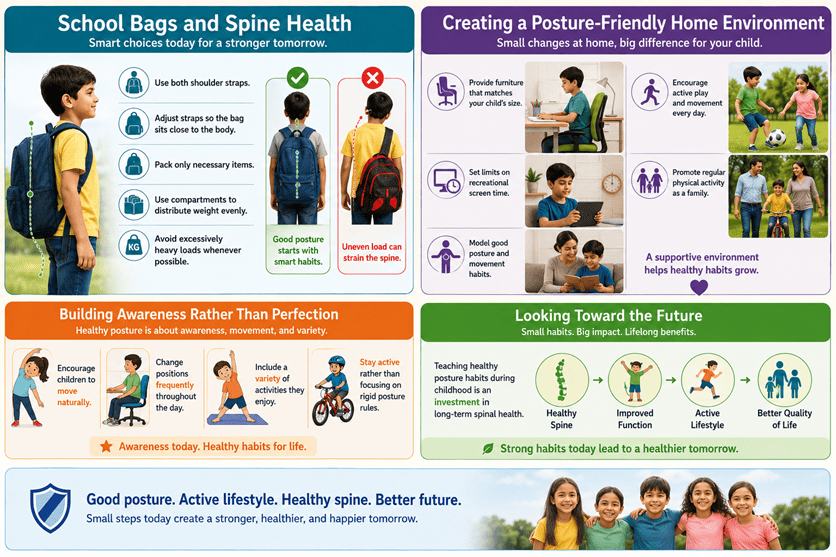
Helpful recommendations include using both shoulder straps, adjusting straps so the bag sits close to the body, packing only necessary items, using compartments to distribute weight evenly, and avoiding excessively heavy loads whenever possible.
Creating a Posture-Friendly Home Environment
Parents can provide furniture that matches the child’s size, encourage active play, set limits on recreational screen time, promote regular physical activity as a family, and model good posture and movement habits.
Building Awareness Rather Than Perfection
Healthy posture involves awareness, movement, and variety. Children should be encouraged to move naturally, change positions frequently, and stay physically active rather than focusing on rigid posture rules.
Looking Toward the Future
Teaching healthy posture habits during childhood is an investment in long-term spinal health. Simple habits learned early can have lasting benefits, supporting a healthy spine, improved function, and greater quality of life.