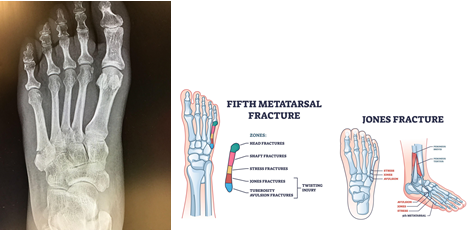
A Jones fracture is a break in the base of the fifth metatarsal bone of the foot. The fifth metatarsal is the long bone located on the outer side of the foot that connects to the little toe. This fracture occurs specifically at the junction between the shaft and the base of the bone, an area that has a limited blood supply. Due to poor circulation in this region, healing may be slow and complications such as delayed union or nonunion can occur.
Jones fractures commonly result from sudden twisting injuries, sports activities involving jumping or pivoting, repetitive stress on the foot, and direct trauma to the outer side of the foot. Athletes and physically active individuals are more prone to this injury.
Clinical Features
Common signs and symptoms include:
• Pain on the outer side of the foot
• Swelling and tenderness
• Difficulty walking
• Bruising around the fracture site
• Pain during weight bearing
• Reduced foot function
Diagnosis is usually confirmed through physical examination, X-ray imaging, and occasionally CT scan or MRI for complicated cases.
Types of Fifth Metatarsal Fractures
1. Avulsion Fracture
Occurs when a small piece of bone is pulled away by a tendon or ligament.
2. Jones Fracture
Occurs in the metaphyseal-diaphyseal junction and has a higher risk of poor healing.
3. Stress Fracture
Develops gradually because of repetitive overuse and excessive loading.
Physical Therapy Management
Physical therapy plays an important role in restoring mobility, strength, balance, and functional activity after a Jones fracture. Rehabilitation depends on fracture severity, healing stage, and whether treatment is conservative or surgical.
Goals of Physiotherapy
• Reduce pain and swelling
• Protect the fracture site
• Restore range of motion
• Improve muscle strength
• Enhance balance and gait
• Prevent stiffness and weakness
• Return the patient to normal activities safely
Phase 1: Acute Phase (0–6 Weeks)
Objectives
• Protect fracture healing
• Control pain and inflammation
• Maintain general mobility
Interventions
• Rest and immobilization
• Non-weight bearing with crutches
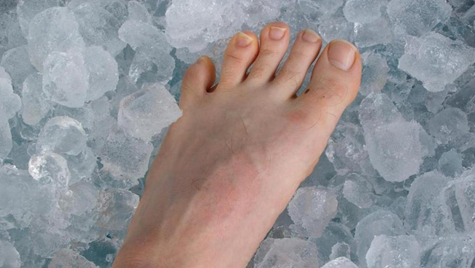
• Ice therapy
• Compression and elevation
• Toe movement exercises
• Isometric exercises for ankle and leg muscles
Patient Education
• Avoid excessive weight bearing
• Proper use of assistive devices
• Importance of compliance with immobilization

Phase 2: Recovery Phase (6–8 Weeks)
Objectives
• Improve mobility
• Begin gradual loading
• Restore joint flexibility
Interventions
• Partial weight-bearing progression
• Gentle ankle range-of-motion exercises
• Stretching exercises
• Resistance band strengthening
• Stationary cycling if tolerated
Exercises
• Ankle pumps
• Heel slides
• Calf stretching
• Theraband exercises
Phase 3: Functional Rehabilitation Phase
Objectives
• Restore strength and endurance
• Improve proprioception and balance
• Prepare for return to activity
Interventions
• Full weight-bearing training
• Balance board exercises
• Single-leg standing
• Gait training
• Functional strengthening
• Sport-specific drills for athletes
Advanced Exercises
• Heel raises
• Mini squats
• Step-ups
• Hopping drills
• Agility exercises

Surgical Intervention
Surgical treatment is often recommended in displaced fractures, nonunion or delayed healing, athletes requiring early return to sports, recurrent fractures, and severe fractures with instability.
Common Surgical Procedures
1. Intramedullary Screw Fixation
A metal screw is inserted into the canal of the fifth metatarsal to stabilize the fracture.
2. Bone Grafting
Used in cases of delayed healing or nonunion to stimulate bone repair.
3. Plate Fixation
A plate and screws may be used for complex or comminuted fractures.
Post-Surgical Rehabilitation
After surgery, physiotherapy focuses on pain and swelling control, gradual weight-bearing progression, scar management, range-of-motion exercises, strengthening exercises, and functional rehabilitation.
Recovery time may vary between 8 to 12 weeks depending on fracture healing and patient activity level.
Complications
Possible complications include:
• Delayed union
• Nonunion
• Refracture
• Chronic pain
• Foot stiffness
• Muscle weakness
Prevention
Preventive measures include:
• Wearing proper footwear
• Gradual increase in sports intensity
• Strengthening foot and ankle muscles
• Maintaining good balance and flexibility
• Avoiding repetitive stress overload
Conclusion
A Jones fracture is a significant injury affecting the fifth metatarsal bone of the foot. Because the fracture occurs in an area with limited blood supply, healing can be prolonged. Both conservative care and surgical management may be required depending on fracture severity. Physical therapy is essential for restoring mobility, strength, balance, and safe return to daily and athletic activities.