Introduction
Sleep is meant to restore the body, yet many individuals wake up with neck pain, stiffness, or headaches. While cervical spine problems are often linked to poor posture, prolonged screen use, or stress, one commonly overlooked factor is the pillow. From a cervical spine perspective, pillow height, shape, and support play a critical role in maintaining neck alignment during sleep.
Understanding the Cervical Spine During Sleep
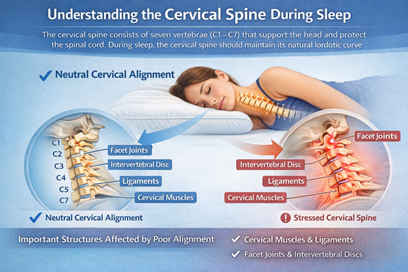
The cervical spine consists of seven vertebrae (C1–C7) that support the head and protect the spinal cord. During sleep, the cervical spine should maintain its natural lordotic curve. Any prolonged deviation from this neutral alignment can place stress on cervical muscles, ligaments, facet joints, and intervertebral discs.
How an Improper Pillow Affects the Neck
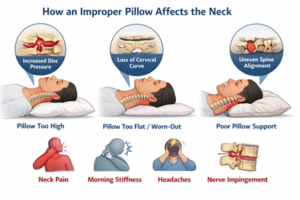
An unsuitable pillow can disturb cervical alignment in several ways. A pillow that is too high pushes the neck into flexion, increasing disc pressure. A very flat or worn-out pillow allows the neck to sag, leading to loss of cervical lordosis. Uneven or poor-quality pillows may cause asymmetrical muscle loading. Over time, these factors may result in chronic neck pain, morning stiffness, cervicogenic headaches, and nerve-related symptoms.
Sleeping Positions and Pillow Selection
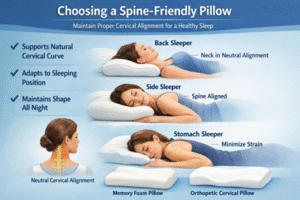
Back sleepers require a pillow that supports the natural curve of the neck without pushing the head forward. Side sleepers need a firmer and thicker pillow to fill the space between the shoulder and neck, maintaining a straight spinal alignment. Stomach sleeping places the 4cervical spine in excessive rotation and extension and is generally discouraged from a spinal health perspective.
Cervical Spine Conditions Linked to Poor Pillow Use
Improper pillow support may aggravate cervical spondylosis, disc bulge or herniation, chronic neck muscle spasm, postural neck pain, and cervicogenic headaches. Individuals with existing cervical spine disorders are particularly sensitive to poor sleep support.
Choosing a Spine-Friendly Pillow
An ideal pillow should maintain neutral cervical alignment, support natural lordosis, adapt to sleeping position, and retain its shape throughout the night. Memory foam and orthopedic cervical pillows are commonly recommended; though individual comfort remains important.
When Should You Change Your Pillow?
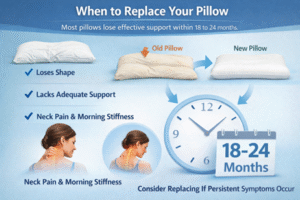
A pillow should be replaced if it has lost its shape, no longer provides adequate support, or if persistent neck pain and morning stiffness are present. Most pillows lose effective support within 18 to 24 months.
Clinical Perspective and Preventive Advice
From a clinical viewpoint, correcting pillow-related issues is a simple yet effective preventive strategy. Combined with posture correction, ergonomic awareness, and gentle cervical exercises, appropriate pillow selection can significantly reduce neck symptoms.
Conclusion
A pillow is not merely a comfort accessory but an essential support structure for the cervical spine. An improper pillow can silently strain the neck for hours each night, contributing to pain and dysfunction. Choosing the right pillow is a key step toward long-term cervical spine health and quality sleep.