Introduction
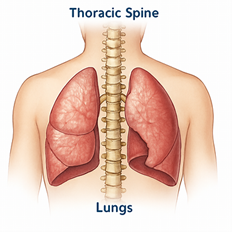
The thoracic spine forms the structural foundation of the rib cage and plays a crucial role in respiratory mechanics. Although breathing is often viewed as an automatic function driven by the diaphragm, the mobility of the thoracic spine significantly affects how efficiently the lungs expand and how effectively air moves in and out of the body. Limited thoracic mobility can compromise respiratory function, while targeted physiotherapy can enhance breathing capacity and overall well-being.
Anatomical Relationship Between the Thoracic Spine and the Lungs
The thoracic spine consists of twelve vertebrae (T1–T12), each connected to a pair of ribs. Together, they create a semi-rigid but flexible cage that protects the lungs and heart. This rib-spine complex must move freely to allow expansion of the rib cage during inhalation, elevation and outward rotation of the ribs, efficient diaphragm descent, and adequate space for lung inflation. When thoracic segments stiffen, these movements become restricted, directly influencing respiratory mechanics.
How Thoracic Mobility Affects Lung Expansion
- Rib Cage Expansion: During inhalation, the ribs move in a “pump-handle” and “bucket-handle” motion. These motions depend on the mobility of the thoracic vertebrae. Good mobility allows the ribs to lift and rotate outward, increasing thoracic volume. Restricted mobility limits rib movement, reducing the space available for lung expansion.
- Diaphragm Function: The diaphragm relies on the thoracic cage to expand upward and outward. A flexible thoracic spine allows the diaphragm to descend fully. A stiff thoracic spine forces the diaphragm to work harder, reducing breathing efficiency and increasing accessory muscle use.
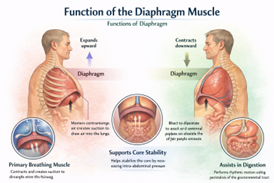
- Lung Volume and Ventilation: Reduced thoracic mobility can lead to lower tidal volume, shallow breathing patterns, reduced oxygen exchange, and increased respiratory effort. Over time, this can contribute to fatigue, poor posture, and decreased exercise tolerance.
Impact on Breathing Efficiency
- Increased Work of Breathing: When the thoracic spine is stiff, the body compensates by overusing neck and shoulder muscles, leading to inefficient breathing patterns, faster fatigue, and reduced endurance.
- Altered Posture: Poor posture—especially thoracic kyphosis—compresses the chest cavity. Forward head and rounded shoulders reduce lung capacity. The diaphragm becomes less effective, forcing shallow chest breathing.
- Reduced Oxygenation: Limited lung expansion means less oxygen reaches the bloodstream, affecting cognitive performance, physical stamina, and recovery after exertion.
Role of Physiotherapy in Improving Thoracic Mobility
- Manual Therapy: Physiotherapists use mobilization and manipulation techniques to restore movement in stiff thoracic segments, improving rib mobility and enhancing chest expansion.
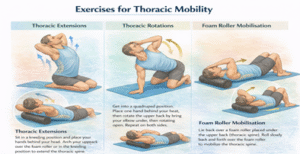
- Mobility Exercises: Exercises such as thoracic extensions, rotations, and foam-roller mobilizations help increase spinal flexibility, improve rib cage mechanics, and promote deeper, more efficient breathing.

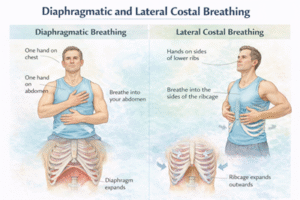
- Breathing Retraining: Physiotherapists teach diaphragmatic and lateral-costal breathing techniques to optimize lung expansion and reduce accessory muscle overuse.

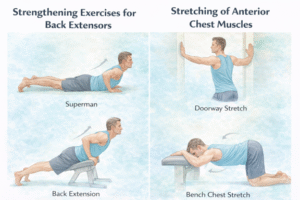
- Postural Correction: Strengthening the back extensors and stretching tight anterior muscles helps realign the thoracic spine, creating more space for the lungs to expand.
Clinical and Functional Benefits
Improving thoracic mobility has been shown to enhance lung capacity, reduce breathlessness, improve athletic performance, support recovery in respiratory conditions, and reduce musculoskeletal pain associated with poor breathing patterns. Even in healthy individuals, better thoracic mobility leads to more efficient breathing and improved overall vitality.
Conclusion
Thoracic spine mobility is a key but often overlooked factor in respiratory health. Because the thoracic spine and rib cage form the mechanical framework for breathing, any restriction in mobility can significantly impair lung expansion and breathing efficiency. Physiotherapy interventions—ranging from manual therapy to targeted exercises—play a vital role in restoring mobility, improving respiratory mechanics, and enhancing overall functional capacity. Prioritizing thoracic mobility is essential not only for individuals with respiratory or postural issues but for anyone seeking better health and performance.