Description
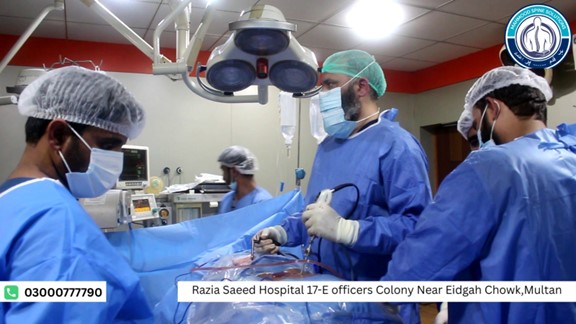
Endoscopic spine surgery is an advanced form of ultra–minimally invasive spinal surgery performed through a very small skin incision using a high-definition endoscope, specialized instruments, and continuous saline irrigation for clear visualization. Unlike conventional open or microscopic spine surgery, this technique allows the surgeon to reach the pathological area of the spine by gently dilating tissues rather than cutting muscles and ligaments.
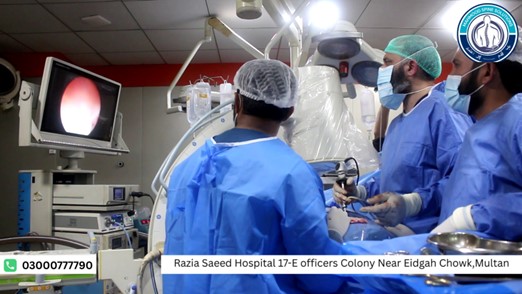
A working channel (usually 7–8 mm) is introduced through the skin under fluoroscopic guidance. Through this channel, the endoscope provides magnified illumination of the disc, nerve root, and surrounding structures, allowing precise removal of the compressive pathology such as herniated disc material or bony stenosis.
Most procedures are performed under local anesthesia with conscious sedation, enabling real-time patient feedback and reducing anesthesia-related risks. Because tissue damage is minimal, patients typically experience less pain, faster recovery, shorter hospital stay, and early return to activity.
Why It Is Considered Minimally Invasive
Endoscopic spine surgery is regarded as one of the most minimally invasive techniques in spinal care because:
- Muscle fibers are separated, not cut
- No large incision or muscle stripping
- Minimal blood loss
- Reduced postoperative inflammation
- Preservation of spinal stability and normal anatomy
- Very small working portal (keyhole approach)
- Faster wound healing and minimal scar formation
This preservation of normal tissues significantly reduces postoperative pain and the need for prolonged rehabilitation.
Indications
Common indications include:
- Lumbar Disc Herniation (contained, extruded, migrated)
- Sciatica due to nerve root compression
- Lumbar Foraminal Stenosis
- Lumbar Canal Stenosis (selected cases)
- Recurrent Disc Herniation
- Far Lateral Disc Herniation
- Cervical Disc Herniation (selected cases)
- Facet cyst (synovial cyst) removal
- Patients unfit for general anesthesia
- Patients requiring early return to work
- Obese and elderly patients where open surgery carries higher risk
Contraindications
Contraindications include:
- Severe spinal instability (e.g., spondylolisthesis requiring fusion)
- Gross central canal stenosis involving multiple levels
- Spinal tumors or infections
- Cauda equina syndrome requiring urgent open decompression
- Severe deformities (scoliosis/kyphosis)
- Very large migrated disc fragments not reachable endoscopically (relative)
- Lack of surgical expertise or appropriate equipment
Proper patient selection is critical for successful outcomes.
Cosmetic-Friendly Advantages
One of the notable benefits of endoscopic spine surgery is its excellent cosmetic outcome:
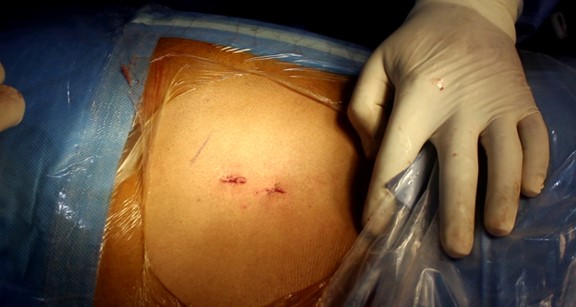
- Incision size is typically less than 1 cm
- Minimal or no visible scar after healing
- No stitch marks in many cases (single suture or adhesive closure)
- Reduced risk of wound infection
- Faster skin healing due to minimal tissue trauma
This makes it especially appealing for young, working, and cosmetically conscious patients.
Key Benefits at a Glance
Incision size: < 1 cm
Muscle damage: Minimal (muscle splitting)
Blood loss: Very low
Anesthesia: Often local
Hospital stay: Same day / 24 hours
Recovery time: Very fast
Scar: Almost invisible
Post-op pain: Significantly less
Conclusion
Endoscopic spine surgery represents a major advancement in spinal care by combining precision, safety, minimal tissue damage, and superior cosmetic results. With appropriate indications and skilled surgical expertise, it offers patients an effective solution with faster recovery and less postoperative discomfort compared to traditional techniques.