
When people think about maintaining a healthy spine, they often focus on sitting posture, lifting techniques, or choosing the right mattress. While these factors are important, one of the most effective ways to support the spine is by developing good core strength. The muscles of the core act as the body’s natural support system, helping to stabilize the spine during everyday activities such as walking, standing, bending, lifting, and reaching.
A strong and well-functioning core does not simply mean having visible abdominal muscles. Instead, it refers to a group of muscles working together to provide stability, balance, and efficient movement. Improving core strength can help reduce the stress placed on the spine, enhance physical performance, and lower the risk of developing back pain.
What Is the Core?
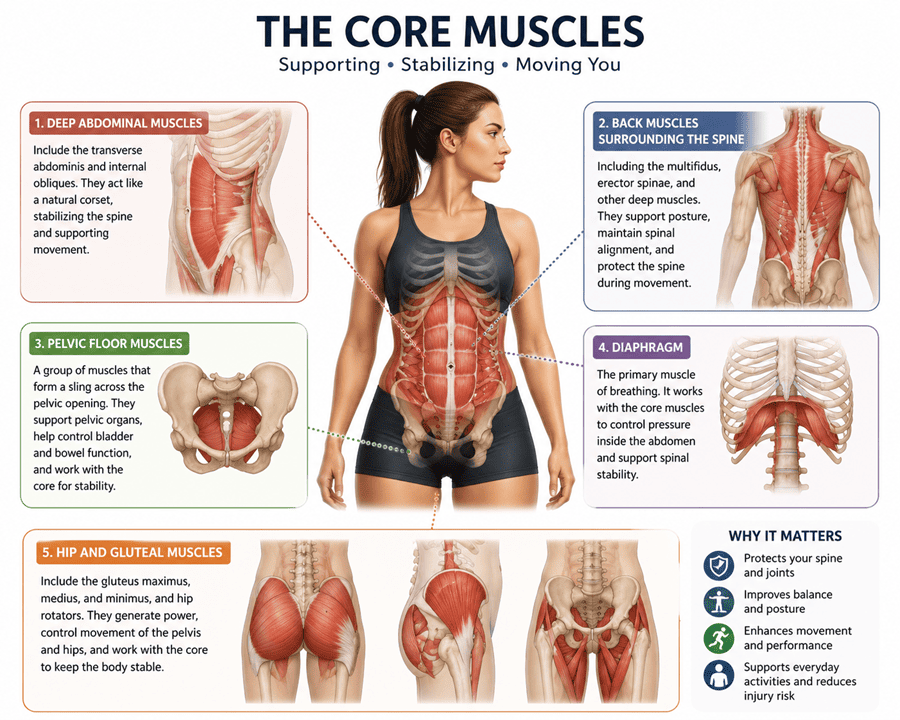
The core is a collection of muscles that surround and support the trunk of the body. These muscles work together to stabilize the spine and pelvis before and during movement.
The core includes:
- Deep abdominal muscles
- Back muscles surrounding the spine
- Pelvic floor muscles
- Diaphragm
- Hip and gluteal muscles
Why Is Core Strength Important for the Spine?
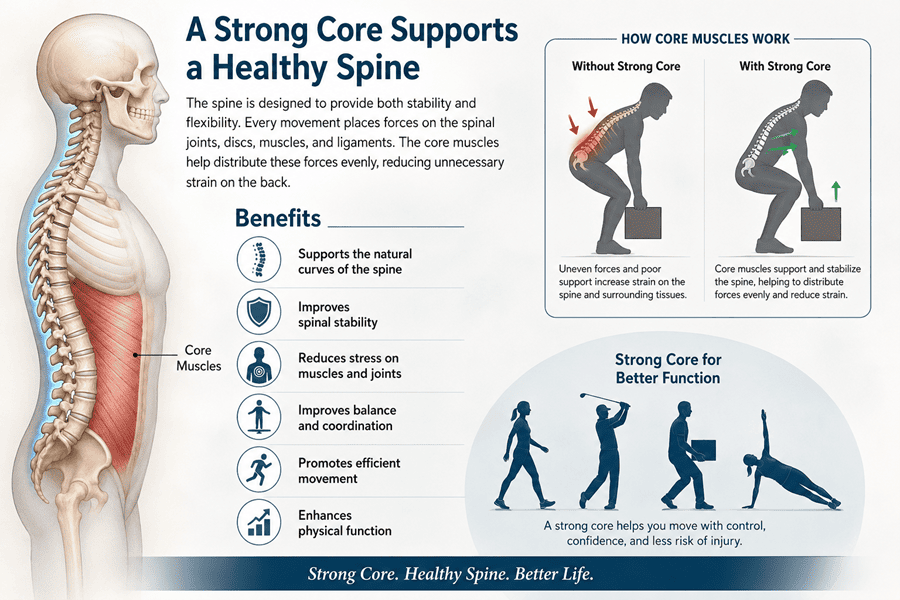
The spine is designed to provide both stability and flexibility. Every movement places forces on the spinal joints, discs, muscles, and ligaments. The core muscles help distribute these forces evenly, reducing unnecessary strain on the back.
Benefits:
- Supports the natural curves of the spine
- Improves spinal stability
- Reduces stress on muscles and joints
- Improves balance and coordination
- Promotes efficient movement
- Enhances physical function
Core Strength and Back Pain
Weak or poorly coordinated core muscles may contribute to inefficient movement patterns. Although not every episode of back pain is caused by weak core muscles, appropriate core training is often forms part of rehabilitation.
Everyday Activities That Depend on Core Strength
- Standing
- Sitting
- Walking
- Climbing stairs
- Lifting household items
- Carrying groceries
- Reaching overhead
- Getting in and out of a chair
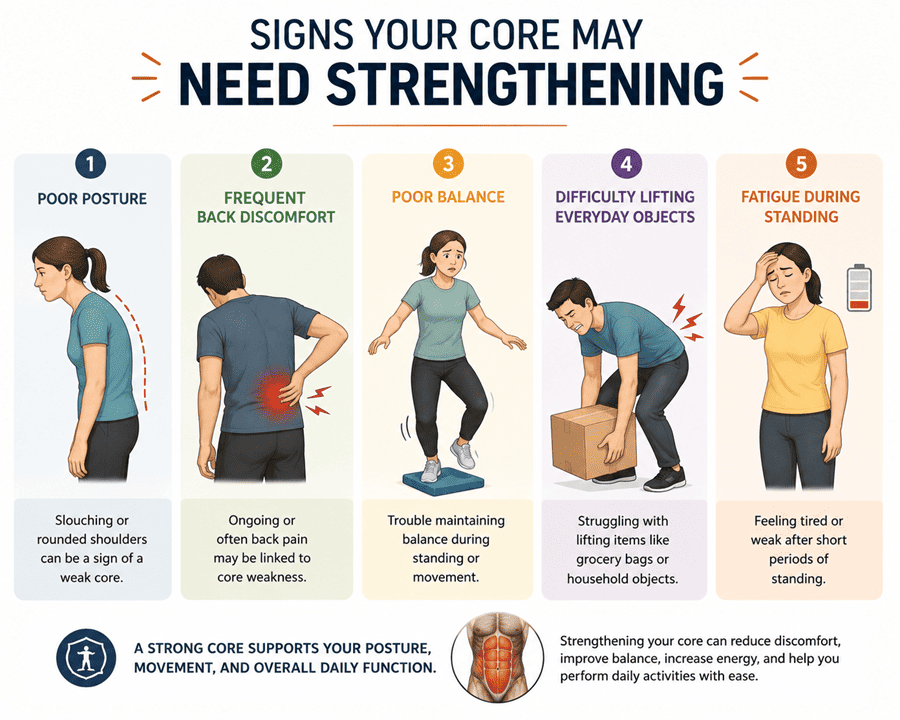
Signs Your Core May Need Strengthening
- Poor posture
- Frequent back discomfort
- Poor balance
- Difficulty lifting everyday objects
- Fatigue during standing
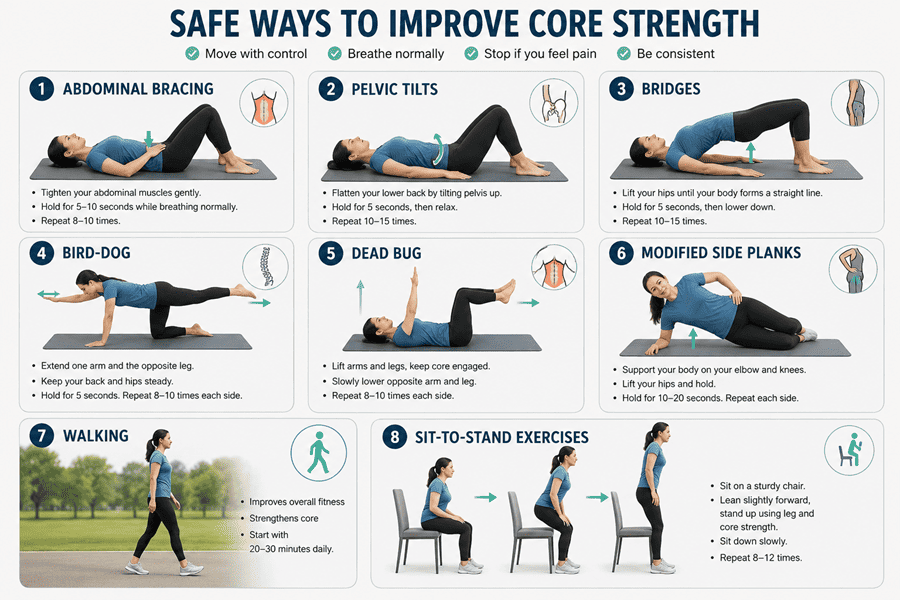
Safe Ways to Improve Core Strength
- Abdominal bracing
- Pelvic tilts
- Bridges
- Bird-dog
- Dead bug
- Modified side planks
- Walking
- Sit-to-stand exercises
Common Misconceptions
• Core strength is not the same as six-pack muscles.
• Harder exercises are not always better.
• Core exercises alone do not eliminate all back pain.
Role of a Physiotherapist
A physiotherapist can assess movement, strength, flexibility, balance, and function before designing an individualized exercise program.
Practical Tips
- Stay physically active.
- Avoid prolonged sitting.
- Lift correctly.
- Maintain a healthy weight.
- Take movement breaks.
- Sleep in a supportive position.
- Exercise consistently.
Conclusion
Core strength is essential for spinal stability, efficient movement, and long-term spine health. Combined with regular activity and healthy lifestyle habits, appropriate core training helps support daily function and overall well-being.