
The Silent Signals We Often Ignore
Spinal disorders are often associated with old age, but an increasing number of young adults are experiencing spine-related problems today. Sedentary lifestyles, excessive screen time, poor posture, and lack of physical activity have quietly turned spinal health into a growing concern among people in their late teens and twenties. Unfortunately, early warning signs are frequently ignored or misunderstood, allowing minor issues to progress into chronic spinal conditions. Recognizing these early signals is essential for prevention and long-term well-being.
Why Spinal Health Matters in Young Adults
The spine is the central support structure of the human body. It protects the spinal cord, enables movement, and maintains posture. During young adulthood, the spine is still adapting to lifestyle habits. Repeated stress, poor ergonomics, and unhealthy routines during this phase can permanently affect spinal alignment and function.
Common Early Warning Signs of Spinal Disorders
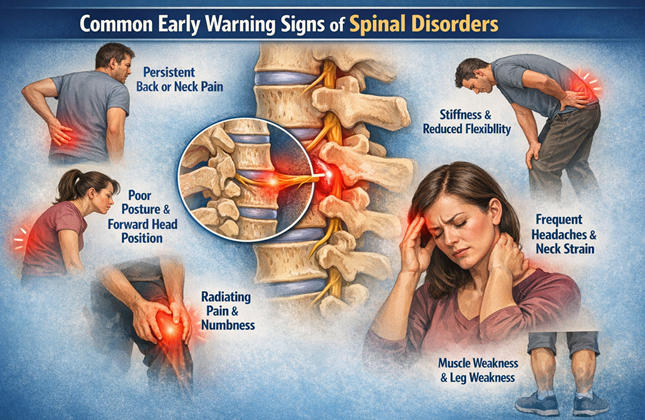
• Persistent back or neck pain that lasts for weeks may indicate underlying spinal issues.
• Poor posture, including slouching and forward head posture, is an early physical sign of spinal stress.
• Stiffness and reduced flexibility, especially in the morning, may suggest early joint or disc involvement.
• Radiating pain, numbness, or tingling in the arms or legs can indicate nerve irritation.
• Frequent headaches linked to neck strain may be related to cervical spine problems.
• Muscle weakness or imbalance can signal spinal nerve involvement.
Lifestyle Factors Contributing to Early Spine Problems
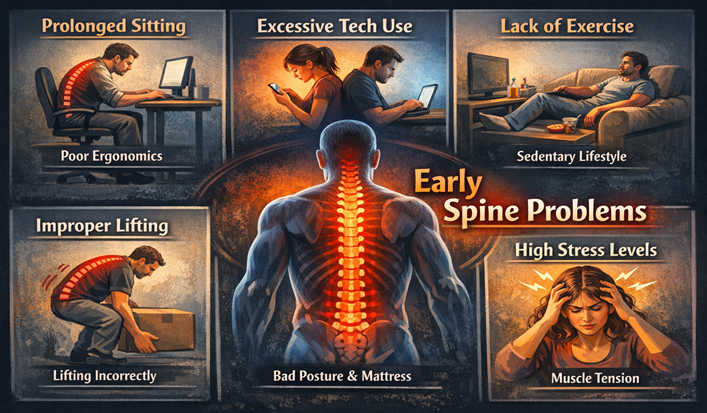
• Prolonged sitting with poor ergonomics
• Excessive mobile phone and laptop use
• Lack of regular physical activity
• Improper lifting techniques
• Poor sleep posture and inadequate mattress support
• High stress levels leading to muscle tension
Psychological Stress and the Spine
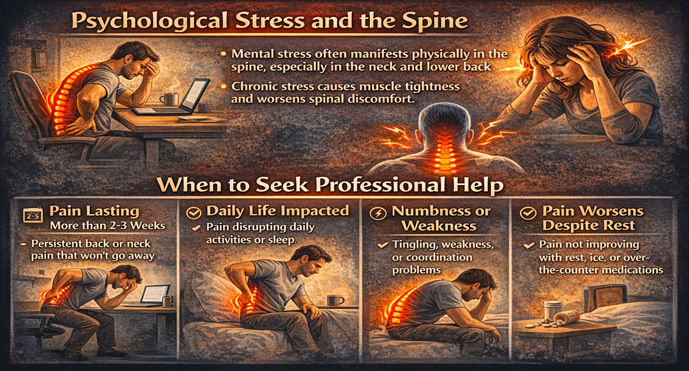
• Mental stress often manifests physically in the spine, especially in the neck and lower back.
• Chronic stress causes muscle tightness and worsens spinal discomfort.
When to Seek Professional Help
• Pain lasting more than two to three weeks
• Symptoms interfering with daily activities or sleep
• Presence of numbness, weakness, or loss of coordination
• Pain that worsens despite rest
Preventive Measures for Long-Term Spine Health
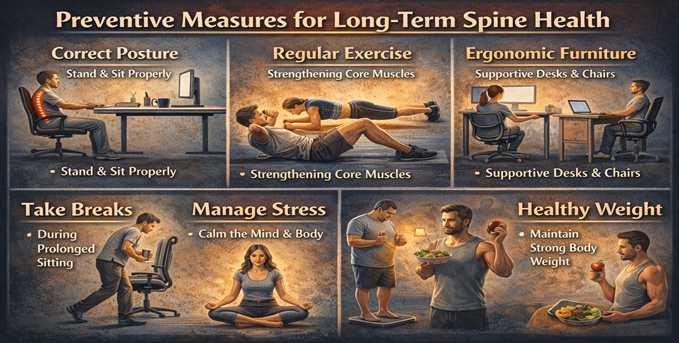
• Maintaining correct posture
• Engaging in regular exercise and core strengthening
• Using ergonomic furniture
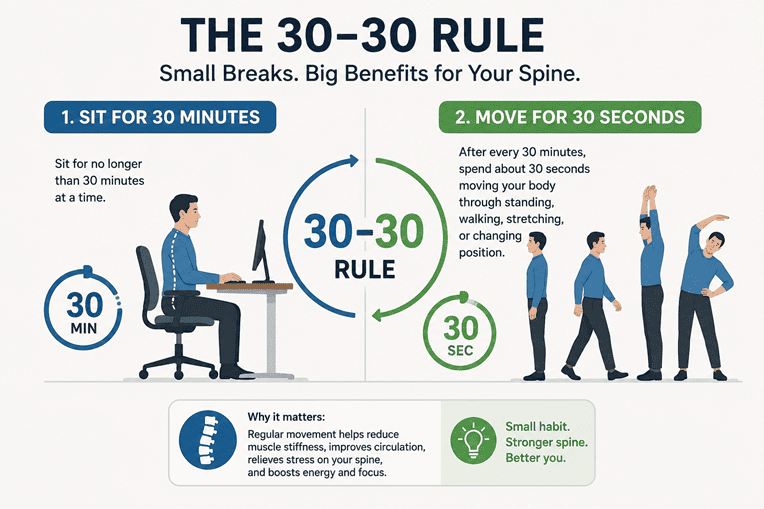
• Taking breaks during prolonged sitting
• Managing stress effectively
• Maintaining a healthy body weight
Conclusion
Spinal disorders in young adults develop gradually through ignored warning signs and unhealthy habits. Early recognition and lifestyle changes can help ensure long-term spinal health.